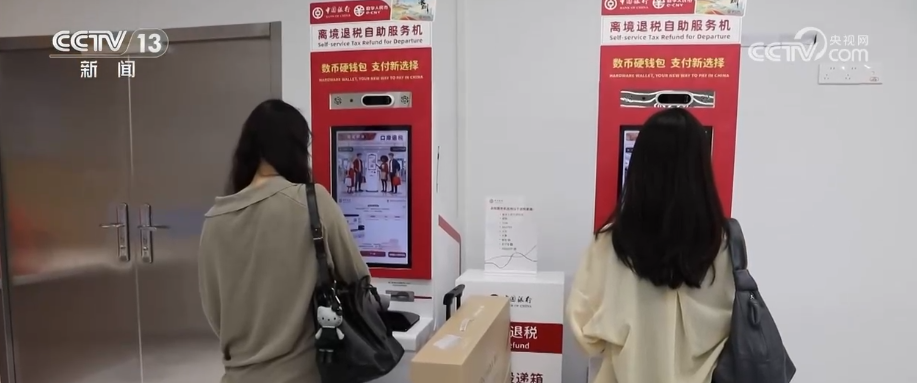
CCTV News: The May Day holiday is coming soon, and data from relevant tourism platforms show that the number of inbound travel orders during the May Day holiday has increased by 173% year-on-year. Recently, six departments have issued and optimized tax refund policies for departure, and a series of measures will play a role in continuously expanding the scale of inbound travel? Inbound tourism, whether in cultural tourism or consumer market, can it become a new growth point? "News 1+1" connects with Ma Yiliang, vice president of the China Tourism Research Institute, to bring interpretation and analysis together.
In the future, to attract more foreign tourists, which services need to continue to speed up and improve?
Ma Yiliang, Vice President of China Tourism Research Institute: 1. The sinking of quality services. China has a relatively broad territory. Different provinces and regions have great differences in their natural appearance and customs. The customer source advantages and customer source market of each local target will be different. In this process, many inbound tourists will increasingly sink to some small and medium-sized cities or destinations, so related services will further sink to small and medium-sized cities. 2. Linkage of services across departments, industries and regions. For example, after foreign tourists come, there may be several cities where they go, and the relevant routes must be matched. In addition, for example, some payment methods will be made in some places, some places will make digital RMB "hard wallets", and some places are also promoting prepaid cards. Choose one or two of them to be better, and spread them first across the country, and then through relevant policies, open some technical means.
How can each province attract more foreign tourists?
Ma Yiliang, Vice President of China Tourism Research Institute: 1. In the process of urban marketing, "self-report" marketing should be turned into "other-report" marketing. For example, if we "go out", we are good at promoting ourselves, and overseas tourists may hesitate. If we let overseas internet celebrities, overseas suppliers and travel agencies promote China, it is easier for foreign tourists to agree with their statements. 2. Launch and marketing promotion of cross-regional lines. When a foreign tourist comes to China, it was found through monitoring that the average stay time of a foreign tourist exceeds seven days, and the average stay time of a city is nearly three days. That is to say, he has to go to two to three cities at a time. He follows the route, and may not follow a certain point, so I want to interact with different routes across regions. 3. Brand marketing will slowly be transformed into product marketing. For example, it is difficult to let foreign tourists know about Hubei or Hunan, but let them know about the Three Gorges and Shennongjia, these relatively concrete products, may be more acceptable.