
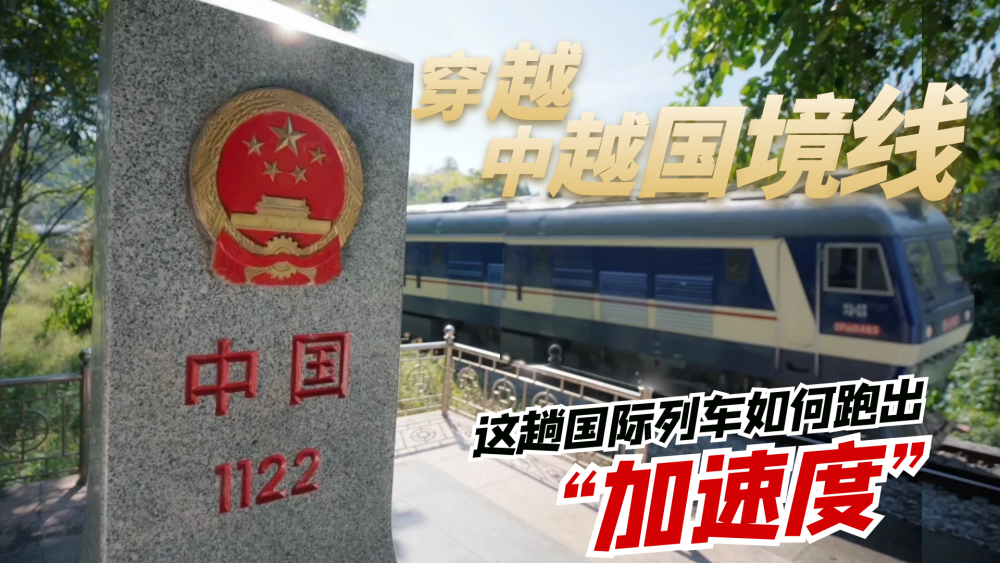
Xinhua News Agency, Nanning, January 15th (Reporters Chen Luyuan and Hu Jiali) In the high mountains on the China-Vietnam border, boundary monument No. 1122 stands quietly. A train speeds past, fully loaded with goods, crossing the border and heading towards Vietnam. .
This is the first China-Vietnam New Year goods train this year, which started on the 15th. Coconuts from Hainan, jams from Henan, chestnut cakes from Yunnan... "When I translate the names of these goods, I can feel the strong flavor of the New Year." said Xie Liping, the on-board translator.
After crossing the border, the train arrived at Dongdeng Station in Vietnam in less than an hour. Xie Liping smoothly handed over to the Vietnamese railway staff, and then took the train back to Pingxiang Station, the national gate station, for the next train. Prepare for a train. "At most, there are 5 trips to and from China and Vietnam a day." Xie Liping said that this kind of work rhythm has become the norm since 2024.
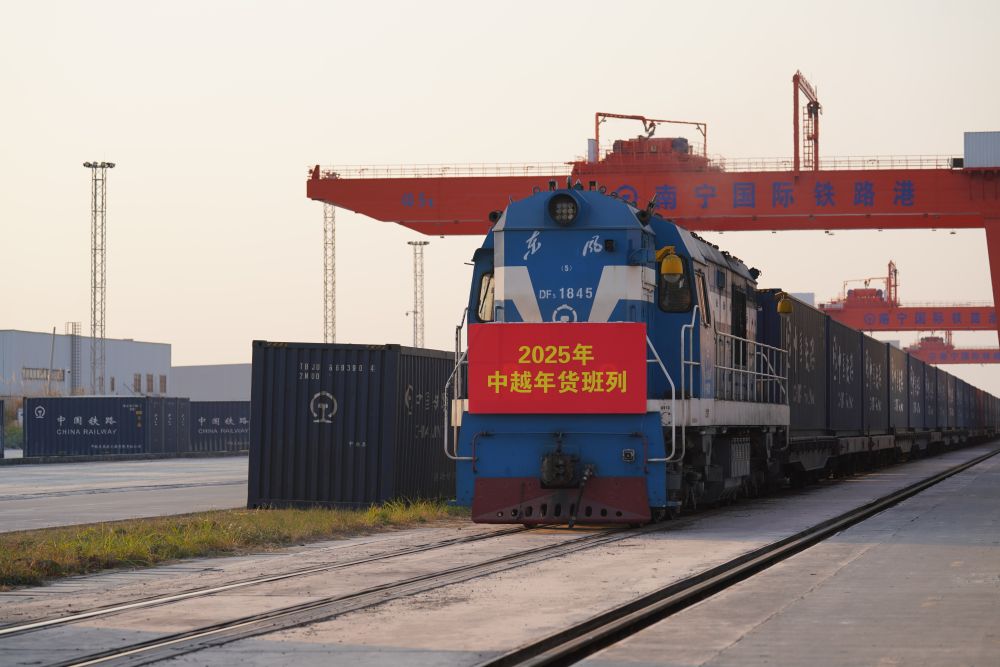
On January 15, the China-Vietnam New Year goods train was ready for departure at the Nanning International Railway Port. Published by Xinhua News Agency
Recently, we have received many urgent new year orders from Vietnamese customers, and Ruan Zhigang, the business manager of Risheng Import and Export Trading Co., Ltd., is extremely busy. "The New Year is approaching, and Vietnam has also begun to enter the rhythm of 'preparing New Year's goods'. There is a huge demand for various types of food, and the most popular ones now are our Chinese milk tea ingredients."
Ruan Zhigang told reporters that where he is The company has been transporting food to ASEAN countries through China-Vietnam trains since 2018. "Now the China-Vietnam trains are becoming more and more efficient and can achieve 'same-day delivery', making food transportation more secure."
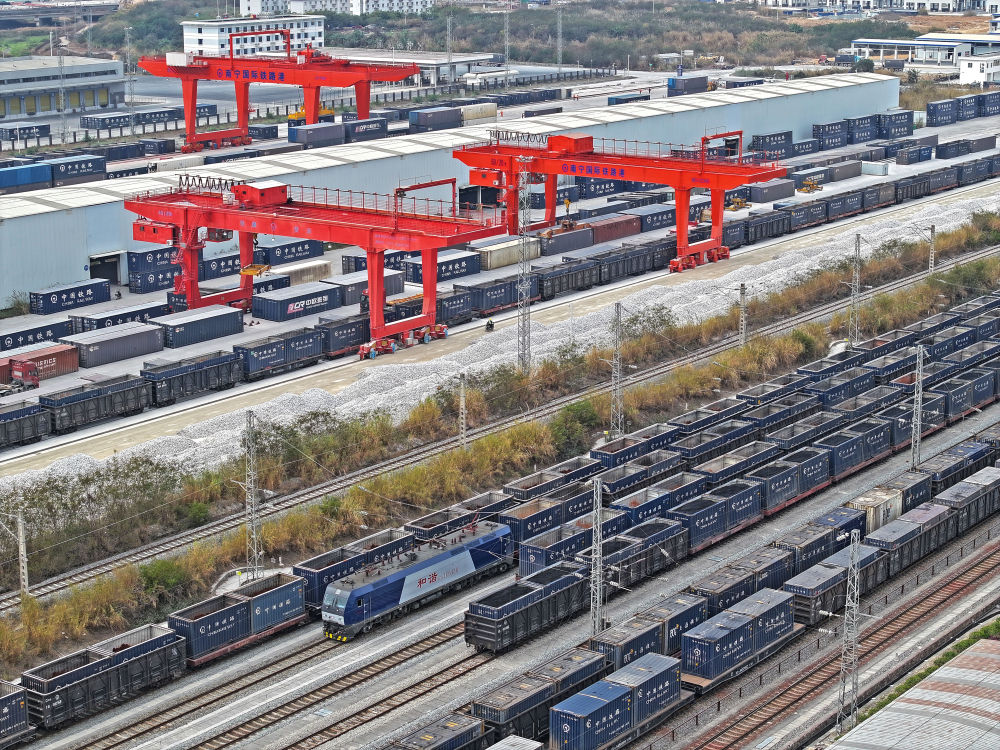
On January 10, China-Vietnam trains were organized at the Nanning International Railway Port (drone photo). Photo by Xinhua News Agency reporter Zhou Hua
In 2017, the State Railway Nanning Bureau successfully launched the Nanning-Hanoi cross-border container train, also known as the China-Vietnam train. “At first, we mainly transported relatively basic goods, with less than 5 trains running every month.” Peng Weijun, deputy director of the 95306 Freight Logistics Service Center of the State Railway Nanning Bureau Group Co., Ltd., said that in recent years, with the rapid development of Sino-Vietnamese trade and the efficiency of Sino-Vietnamese railway transportation As a result, more and more goods are choosing the China-Vietnam train.
Data show that in 2024, China-Vietnam trains will ship a total of 19,670 TEUs of goods, a year-on-year increase of more than 11 times. The single-month shipment volume record has been refreshed five times. The types of transported goods have changed from basic building materials, Light industrial products have gradually expanded to high-end electronic products, precision machinery and equipment, daily necessities and specialty agricultural products.
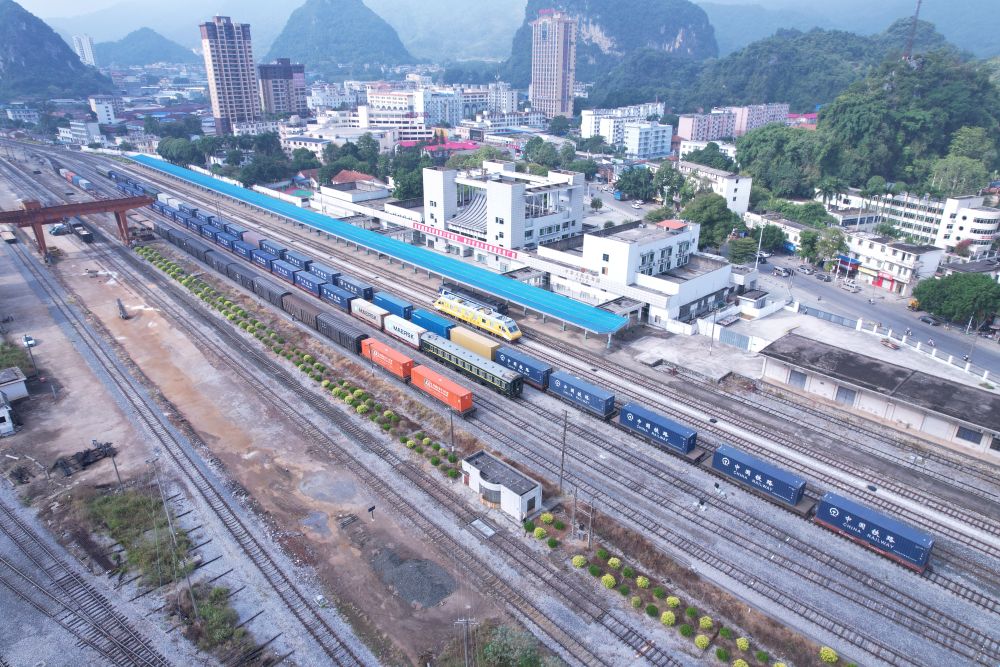
On October 17, 2024, at Guomen Station Pingxiang Station, the China-Vietnam train was ready to go. Xinhua News Agency
The reporter saw at the Pingxiang Railway Port that freight traffic was criss-crossing, witnessing the "two-way rush" of China-Vietnam trade. China has remained Vietnam's largest trading partner for many years, and Vietnam is China's largest trading partner in ASEAN.
The "two-way rush" is inseparable from the joint efforts of China and Vietnam. In 2023, the State Railway Nanning Bureau completed the speed-increasing reconstruction of the Nanning-Pingxiang section of the Hunan-Guangxi Railway, and the train operating speed was increased to 90 kilometers per hour. In January 2024, the railway companies of China and Vietnam negotiated and determined the full timetable of the train. The total transportation time from Nanning South Station in China to Anguang Station in Vietnam was reduced from more than 40 hours to 14 hours at the fastest. "We used to export goods to Vietnam by sea, but now we can save 3 to 5 days by taking the China-Vietnam train." said Zhu Shiqiang, business manager of Sinotrans Guangxi Co., Ltd.
The improvement of transportation efficiency has also established a "fast lane" for "rushing" fruits into China, and special trains for various fruits such as Vietnamese durian were born.
Vietnamese fresh coconuts were allowed to enter the Chinese market in August last year. Two months later, the Shenlang International Intermodal Railway Station in Binh Duong Province, Vietnam, shipped China’s first railway import of Vietnamese fresh coconuts. At the beginning of the new year, the new year's coconut train continues to travel from the tropical areas of Vietnam, across the Sino-Vietnam border, to the hinterland of my country's Central Plains.
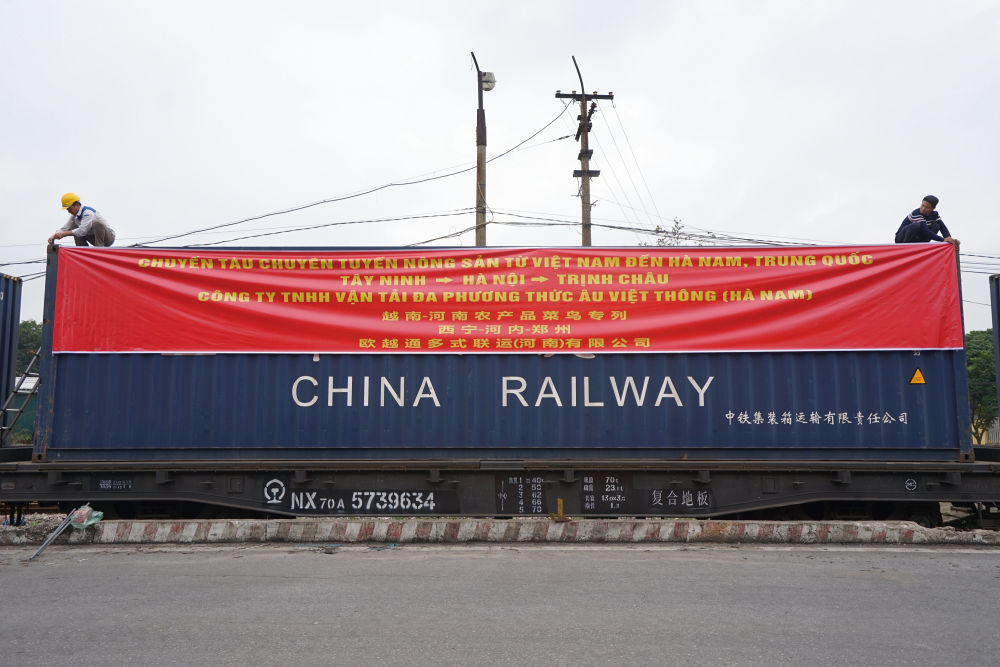
On January 15, 2024, the China-Vietnam train carrying 1,000 tons of cassava starch departed from Hanoi, Vietnam, and headed for Zhengzhou, China. Photo by Xinhua News Agency reporter Hu Jiali
Now, this train can not only radiate my country’s southwest hinterland and the Guangdong-Hong Kong-Macao Greater Bay Area, but also connect China-Europe trains. Chinese goods are not only transported to Vietnam, but also enter Laos, Thailand, Cambodia, Malaysia and other ASEAN countries via Vietnam.
“Stable transport capacity, stable prices and stable timeliness have enhanced the market attractiveness of the channel.” Standing in front of the China-Vietnam train route map, Deputy General Manager of Vietnam Railway Transport and Trading Joint Stock Company, a subsidiary of Vietnam Railway Corporation Nguyen Hoang Anh gestured and said that Vietnam is planning to further invest in improving railway infrastructure including stations and freight yard systems to achieve seamless connection with Chinese railways and enhance transportation capabilities between the two countries.